This article is based on veterinary guidance from UK and international animal health organisations including Cats Protection, the PDSA, the RSPCA, and the American Society for the Prevention of Cruelty to Animals (ASPCA).
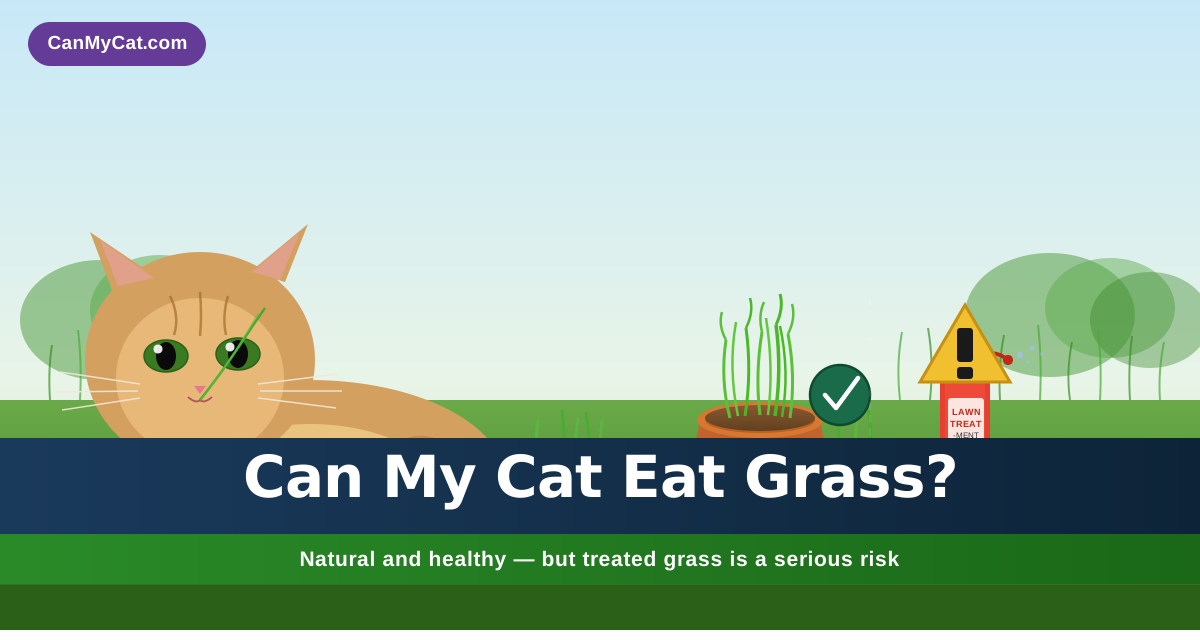
Yes, eating grass is a completely normal and natural behaviour for cats, and plain grass is not toxic to them. Most cats eat grass instinctively and it is generally considered safe and even beneficial in moderation. The main risks are pesticides or herbicides on treated grass, and certain ornamental grasses that may be toxic. Growing your own cat grass (wheatgrass or oat grass) indoors is the safest option for cats that enjoy it.
If you have ever watched your cat deliberately walk over to a patch of grass, sniff it carefully, and then start methodically chewing it, you are not alone. Grass-eating is one of the most common behaviours in domestic cats, and one of the most frequently Googled by worried owners.
The good news is that in most circumstances, a cat eating plain lawn grass is doing something entirely instinctive and harmless. The more interesting question is why they do it, and that turns out to be genuinely fascinating.
Why do cats eat grass?
Scientists and vets have debated this question for years, and while there is no single definitive answer, there are several well-supported explanations. It is likely that different cats eat grass for different reasons, and possibly that the same cat eats grass for different reasons at different times.
1. To aid digestion and clear the gut
One of the most widely accepted explanations is that grass acts as a natural digestive aid. Cats lack the enzyme needed to break down plant material, so grass passes through undigested, and in doing so, it can help move hair, feathers, bones, or other indigestible material through and out of the digestive tract.
In the wild, cats frequently consume prey whole, including fur and small bones. Grass may have evolved as a mechanism for helping process or purge material the digestive system cannot handle. This is supported by observations that outdoor cats, which hunt and consume whole prey, eat grass frequently.
2. To trigger vomiting
Many cats eat grass and then vomit shortly afterwards. For a long time this was assumed to be an accident, that cats simply could not keep grass down. More recent research suggests it may be deliberate.
A 2019 survey study published in the journal Ecology and Evolution found that grass-eating followed by vomiting appears to be an ancestral behaviour shared with wild felids, likely as a way of purging intestinal parasites. The study found that the vast majority of grass-eating episodes did not result in vomiting, suggesting the two behaviours are not always linked.
Cats Protection notes that occasional vomiting after eating grass is normal and not a cause for concern, provided the cat is otherwise well and vomiting is not frequent or distressing.
3. As a source of folic acid
Grass juice contains folic acid (vitamin B9), a nutrient that supports normal cell growth and is found in a mother cat's milk. Some researchers have suggested that cats may instinctively seek out grass as a supplemental source of folic acid, particularly if there is a dietary shortfall.
While this theory has not been conclusively proven, it is consistent with the observation that cats often choose younger, more tender grass shoots, which tend to have higher nutrient content than older, tougher blades.
4. Because they enjoy it
Not everything has to be medicinal. Some cats simply appear to enjoy the texture of chewing grass, and may do so as a form of oral stimulation or enrichment. Indoor cats in particular may seek out grass as a form of environmental variety.
A 2021 study in the journal Applied Animal Behaviour Science surveyed over 1,000 cat owners and found that grass-eating was extremely common, reported in approximately 71% of cats observed for more than six hours per day outdoors. Cats under three years old ate grass most frequently, and the behaviour was significantly more common in cats that also hunted. Vomiting occurred in less than 30% of grass-eating episodes, and the study concluded that grass-eating in cats is a normal, instinctive behaviour rather than a sign of illness.
Is grass safe for cats?
Plain, untreated grass, the kind you find in a natural meadow or an unmanaged patch of lawn, is not toxic to cats. The grass itself poses no direct harm.
However, there are some important caveats that every cat owner should be aware of:
Pesticides and herbicides
This is the most significant risk associated with grass-eating. Garden lawns and public parks are frequently treated with weedkillers, pesticides, fertilisers, and lawn treatments that can be highly toxic to cats. Unlike foraging in a wild meadow, a cat eating grass from a treated lawn may be ingesting chemicals that cause serious harm.
Signs of pesticide or herbicide ingestion include:
- Excessive drooling or foaming at the mouth
- Vomiting or diarrhoea, particularly if severe or persistent
- Tremors, muscle twitching, or seizures
- Loss of coordination or difficulty walking
- Dilated pupils or unusual eye movements
- Lethargy or sudden collapse
Contact your vet or the Animal Poison Line (01202 509000, charges apply) immediately. Do not wait for symptoms to develop. Try to note what products have been used on the grass, and when, this information will help your vet treat your cat more effectively.
RSPCA: 0300 1234 999 (free, 24/7)
Ornamental grasses and grass-like plants
Not everything that looks like grass is safe. Several common garden and houseplants that resemble grass are actually toxic to cats, including:
If your cat has access to a garden, it is worth identifying all the plants present and cross-checking them against a reliable toxic plant list. Use the CanMyCat plant checker at canmycat.com for an instant check on any plant.
What is cat grass, and should you grow some?
Cat grass is a general term for fast-growing, pet-safe grasses grown specifically for cats to nibble on indoors. The most common varieties are:
- Wheatgrass (Triticum aestivum): the most widely available, grows quickly, has a mild flavour, and is the variety most commonly sold as “cat grass” in pet shops
- Oat grass (Avena sativa): slightly coarser texture, popular with cats that like more resistance when chewing
- Barley grass (Hordeum vulgare): sweet flavour, softer texture, often preferred by cats that are picky about texture
- Rye grass (Lolium perenne): a common lawn grass that is safe for cats, sometimes included in mixed cat grass kits
• It gives your cat a safe, untreated, pesticide-free option to nibble whenever they want
• It reduces the temptation to eat outdoor grass that may have been treated
• It provides enrichment and environmental variety for indoor cats
• It is extremely easy to grow; most cat grass kits sprout in 3–5 days
• It is inexpensive - seeds are widely available in supermarkets and pet shops
• Cats with limited outdoor access particularly benefit from having a grass option indoors
How to grow cat grass at home
Growing cat grass is genuinely one of the easiest things you can do for an indoor cat. You need very little equipment and almost no gardening knowledge.
- Buy cat grass seeds or a ready-to-grow kit from a pet shop, garden centre, or supermarket - wheatgrass seeds work perfectly well and cost very little
- Fill a shallow container (a small pot, tray, or even a repurposed food container) with compost or potting soil
- Scatter seeds generously on the surface and cover lightly with a thin layer of soil
- Water gently and place in a light spot, but not in direct harsh sunlight
- Seeds typically germinate within 2–3 days and are ready to offer to your cat within 5–7 days
- Replace the pot every 2–3 weeks as the grass becomes old and less palatable
Most cats take to cat grass readily, though some will need a little encouragement initially. Try placing the pot near their usual resting area, or very gently guiding their attention to it.
When should I be concerned about my cat eating grass?
In most cases, grass-eating is completely normal and requires no intervention. However, there are situations where it can be a sign that something is wrong:
If your cat eats grass compulsively
A cat that is obsessively seeking out grass and eating large amounts repeatedly may be trying to address a digestive issue, nutritional deficiency, or may be experiencing stress or anxiety. If the behaviour seems compulsive or has changed suddenly, it is worth mentioning to your vet.
If vomiting is frequent or severe
Occasional vomiting after eating grass is normal. If your cat vomits every time it eats grass, if vomiting is violent or distressing, or if the cat seems unwell after grass-eating, contact your vet. Frequent vomiting can lead to dehydration and may indicate an underlying issue.
If your cat eats grass and shows any of these signs
- Lethargy or unusual quietness
- Loss of appetite or refusal to drink
- Diarrhoea alongside vomiting
- Blood in vomit or stools
- Neurological signs: tremors, disorientation, seizures
- Swollen or painful abdomen
Any of these symptoms warrant an immediate vet call, particularly if you suspect the grass may have been treated with chemicals.
Many owners give their cats grass specifically to help with hairballs, believing it will help them bring up accumulated fur more easily. While this is a reasonable theory and there is anecdotal evidence supporting it, there is limited clinical research confirming that grass is an effective hairball remedy.
If your cat is struggling with frequent hairballs, speak to your vet about dedicated hairball control foods or supplements, which are formulated specifically for this purpose.
Can kittens eat grass?
Kittens can eat small amounts of cat grass without harm, but it is less commonly necessary for them than for adult cats. Kittens under 12 weeks should not be offered grass as their digestive systems are still very immature.
If you have a kitten with outdoor access, be particularly vigilant about garden treatments — kittens are more likely to eat indiscriminately and are more vulnerable to toxins due to their smaller body size.
The bottom line
• Yes: plain, untreated grass is safe and normal for cats to eat
• Grass-eating is an instinctive behaviour seen in most cats, and is generally healthy
• The main risks are pesticides on treated grass, and mistaking toxic ornamental plants for grass
• Occasional vomiting after eating grass is normal and not a cause for concern
• Growing cat grass (wheatgrass or oat grass) indoors is the safest and most enriching option
• Compulsive grass-eating, or grass-eating combined with other symptoms, warrants a vet check
• If you think your cat has eaten treated grass, contact your vet immediately
Not sure whether something in your garden is safe for your cat? Use the CanMyCat safety checker at canmycat.com to check any plant, food, or household item instantly.
Frequently Asked Questions
My cat eats grass and then vomits - is that normal?
Yes, in most cases. Occasional vomiting after eating grass is a normal part of the behaviour and not a sign that anything is wrong. If vomiting is frequent, severe, or accompanied by other symptoms, speak to your vet.
Should I stop my cat eating grass?
Generally, no — unless you have treated your lawn with pesticides or herbicides, in which case you should keep your cat away from it. If you want to give your cat a safe grass option, grow cat grass indoors instead.
What is the difference between cat grass and catnip?
They are completely different plants. Cat grass (wheatgrass, oat grass, barley grass) is a food that cats eat for digestive and nutritional reasons. Catnip (Nepeta cataria) is an aromatic herb that triggers a brief euphoric response in around 50–70% of cats due to the compound nepetalactone. Both are safe, but they serve different purposes and cats respond to them very differently.
Can I grow cat grass from regular grass seed?
Many common lawn grass varieties are safe for cats, but purpose-grown cat grass (wheatgrass, oat grass, barley grass) is much faster to grow, more palatable to most cats, and more nutritious. Regular lawn grass seed may also contain varieties that are less suitable, and some grass seed mixes include fungicide coatings — so purpose-grown cat grass is the safer and better choice.
My indoor cat is eating houseplants - could it be because they want grass?
Possibly. Indoor cats often seek out greenery as a form of instinctive foraging behaviour, and if no safe grass is available they may turn to whatever green plants are accessible. Growing cat grass indoors is often an effective way to redirect this behaviour away from potentially toxic houseplants.
How often should I replace my cat's grass pot?
Cat grass is best when fresh and young - most cats will lose interest once the grass gets more than 2–3 weeks old and starts to go yellow. Growing a new pot every fortnight, or keeping two pots at different growth stages, ensures there is always fresh grass available.
Is cat grass the same as wheatgrass?
Often, yes. Wheatgrass is the most common variety sold as cat grass, and the two terms are frequently used interchangeably. However, cat grass kits sometimes contain oat grass, barley grass, or a mix of varieties. All are equally safe for cats.
🐱 Check if something is safe for your cat
Use our free AI-powered safety checker — instant results for any food, plant, or household item.
Try CanMyCat free →