This article is based on veterinary guidance from UK and international animal health organisations including Cats Protection, the PDSA, the RSPCA, and the ASPCA.
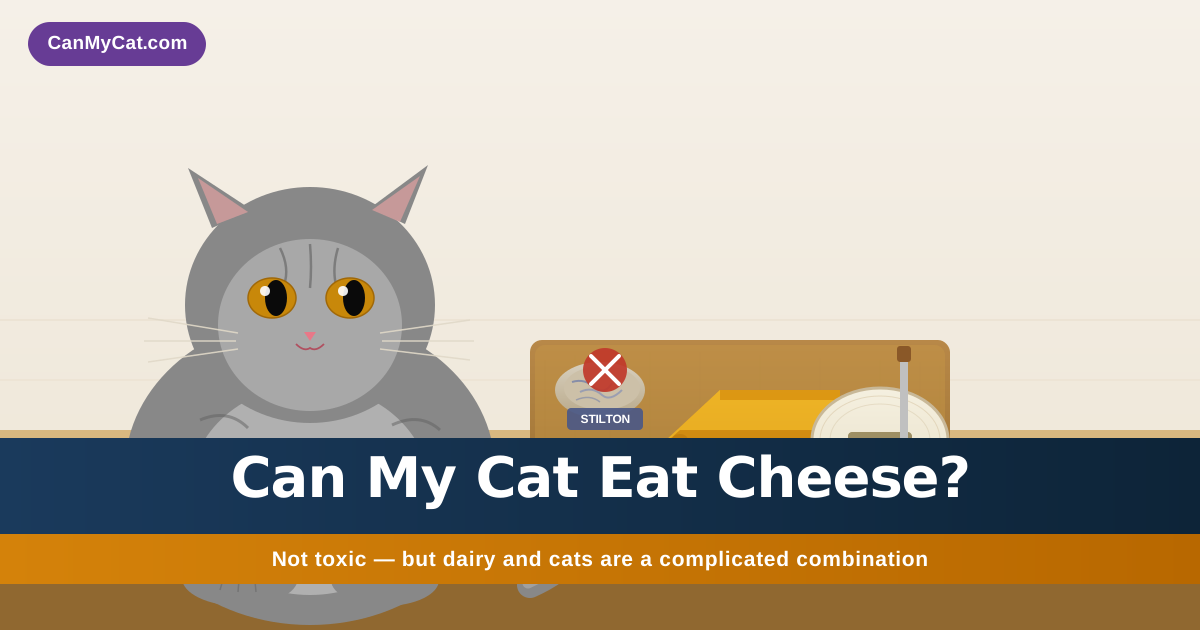
Technically yes - cheese is not toxic to cats. However, most cats are lactose intolerant, which means dairy products like cheese commonly cause stomach upset, vomiting, and diarrhoea. A tiny piece of a hard cheese like cheddar occasionally is unlikely to cause serious harm, but cheese should not be a regular treat. There are far better treat options for cats.
Cheese is one of those foods that seems like it should be fine for cats. After all, cats drink milk in cartoons, and cheese is just another dairy product. But the reality is a bit more complicated, and most vets recommend keeping cheese well away from your cat’s bowl.
This blog covers everything you need to know: why dairy is a problem for cats, which cheeses are most risky, what to do if your cat sneaks a piece, and what to offer instead.
Why dairy is a problem for cats
Kittens produce an enzyme called lactase, which allows them to digest the lactose (a sugar) in their mother’s milk. Once they’re weaned, usually at around 8 weeks, most cats stop producing lactase in significant amounts. The result is that the majority of adult cats are lactose intolerant to some degree.
When a lactose-intolerant cat eats cheese or drinks milk, the undigested lactose ferments in the gut, causing:
- Diarrhoea: often within a few hours of eating dairy
- Vomiting: particularly with softer, higher-lactose cheeses
- Stomach cramps and bloating: your cat may seem uncomfortable or restless
- Flatulence: excess gas as the gut bacteria ferment the lactose
- Lethargy: some cats become quiet and withdrawn after a bout of digestive upset
Cats Protection confirms that while a small amount of cheese is unlikely to be seriously harmful, many cats are lactose intolerant and dairy should be avoided as a regular food or treat.
Not all cheeses are equally problematic. Hard, aged cheeses like cheddar and parmesan have most of their lactose removed during the maturing process, making them significantly lower in lactose than soft cheeses. Cream cheese, cottage cheese, and fresh mozzarella contain much higher levels of lactose and are much more likely to cause a reaction.
Even so, lower lactose does not mean zero lactose, or zero risk.
Is any cheese safe for cats?
In very small amounts, we’re talking a piece the size of your little fingernail, a hard cheese like cheddar is unlikely to cause serious harm to a healthy adult cat. Hard cheeses are lower in lactose, lower in moisture, and less likely to trigger a digestive reaction than soft dairy products.
That said, “safe” is doing a lot of work here. The question isn’t just about lactose, cheese also brings other issues:
- High in fat: cheese is calorie-dense, and even a small amount represents a significant portion of a cat’s daily calorie intake. Regular fatty treats contribute to obesity, which is already a major problem in UK pet cats.
- High in salt: many cheeses, including cheddar and processed cheese slices, contain sodium levels that are far too high for cats. Excessive salt causes increased thirst and urination, and in large amounts can lead to sodium poisoning.
- No nutritional value for cats: cats are obligate carnivores. They have no dietary requirement for dairy at any life stage after weaning, and cheese offers no nutritional benefit they can’t get from their regular complete food.
• Cream cheese: very high in lactose
• Cottage cheese: high lactose, high moisture
• Brie, camembert, and soft ripened cheeses: high lactose, high fat
• Blue cheese (stilton, gorgonzola): contains roquefortine C, which is toxic to cats and dogs
• Processed cheese slices: high in salt and additives
• Cheese with garlic, onion, or herbs added: garlic and onion are toxic to cats
• String cheese and high-moisture mozzarella: high lactose
Blue cheese: a specific warning
Blue cheeses like stilton, roquefort, and gorgonzola deserve a particular mention because they contain a substance called roquefortine C, a mycotoxin produced by the Penicillium mould used in blue cheese production.
Roquefortine C is toxic to cats and dogs. Even a small amount can cause vomiting, diarrhoea, tremors, and in severe cases, seizures. Blue cheese should be treated as a toxic food and kept well away from your cat at all times, not just as a caution, but as a hard rule.
If your cat has eaten blue cheese, contact your vet or the Animal Poison Line (01202 509000) without delay.
How much cheese is too much?
For reference, and to illustrate how little cheese is actually appropriate even for a treat:
Signs your cat has had too much cheese
If your cat has eaten a larger piece of cheese than intended, or got into the fridge unnoticed, watch for these signs over the next 6–12 hours:
- Vomiting, particularly within 2–4 hours
- Loose stools or diarrhoea
- Bloating or a visibly distended abdomen
- Flatulence
- Lethargy or unwillingness to move
- Excessive thirst (particularly if the cheese was salty)
- Tremors or muscle weakness (if blue cheese was consumed — call your vet immediately)
Mild digestive upset from a small amount of cheese usually passes within 12–24 hours. Ensure your cat has access to fresh water, and monitor them closely. If symptoms are severe, persistent, or your cat seems very unwell, contact your vet.
• Your cat ate blue cheese: contact your vet without delay
• Your cat is showing neurological signs: tremors, loss of coordination, or seizures
• Vomiting or diarrhoea is severe or persisting beyond 24 hours
• Your cat seems very lethargic, weak, or in pain
• You are unsure what type or how much cheese was eaten
Animal Poison Line: 01202 509000 (charges apply)
RSPCA: 0300 1234 999 (free, 24/7)
Can kittens eat cheese?
No. Kittens have very specific nutritional requirements during their first year of life, and their calories should come from a complete kitten food rather than treats or scraps. Although kittens produce more lactase than adult cats, their digestive systems are still sensitive and cheese offers them no nutritional benefit.
The one exception: if you are struggling to give a kitten oral medication, a tiny smear of cream cheese on the pill can help, but this is a practical workaround, not a regular treat, and worth discussing with your vet.
What about cheese used to hide medication?
One of the most common reasons owners give cats cheese is to disguise a tablet or capsule. This is generally accepted as an occasional practical measure, but there are some caveats:
- Use the smallest possible amount: a tiny pocket of soft cheese around the pill, not a large piece
- Avoid cream cheese if your cat has a sensitive stomach: a small amount of soft cheddar may be a better choice for pill-hiding than high-lactose cream cheese
- Consider pill pockets instead: commercial cat pill pockets are specifically designed for this purpose, are much lower in lactose, and come in cat-appropriate flavours
- Ask your vet about alternatives: some medications can be compounded into a flavoured liquid or transdermal gel that avoids the need to disguise pills entirely
Better treat alternatives to cheese
If you want to give your cat a treat, there are far better options than cheese, ones that won’t risk digestive upset and actually offer some nutritional value:
When choosing any treat, the rule of thumb is that treats should make up no more than 10% of your cat’s daily calorie intake, which for most cats is a very small amount.
The bottom line
• Cheese is not directly toxic to cats (with the exception of blue cheese)
• Most adult cats are lactose intolerant and will react badly to dairy
• A tiny piece of hard cheese very occasionally is unlikely to cause serious harm
• Blue cheese is toxic and should be treated as a dangerous food
• Cheese is high in fat and salt, neither of which is good for cats
• There are much better treat options that are both safer and more nutritious
• If in doubt, skip it and reach for a cat-specific treat instead
Not sure whether something else your cat has eaten is safe? Use the CanMyCat safety checker at canmycat.com to get an instant answer on any food, plant, or household item.
Frequently Asked Questions
My cat ate a piece of cheddar - should I be worried?
A small piece of cheddar is unlikely to cause serious harm. Watch for signs of digestive upset over the next 6–12 hours, vomiting, diarrhoea, or lethargy. In most cases your cat will be fine. If symptoms are severe or prolonged, call your vet.
Can cats eat cream cheese?
It’s best avoided. Cream cheese is high in lactose and fat, and is more likely to cause digestive upset than hard cheeses. If you’re using it to hide medication, use the smallest possible amount and consider pill pockets as a better alternative.
My cat stole blue cheese from my plate, what do I do?
Contact your vet or the Animal Poison Line (01202 509000) straight away. Blue cheese contains roquefortine C which is toxic to cats and can cause tremors and seizures. Don’t wait for symptoms to develop.
Can cats eat cottage cheese?
It’s best avoided. Cottage cheese is high in lactose and moisture, making it one of the more likely dairy products to cause stomach upset. Some raw feeding advocates include it in small amounts, but for most cats the risk of digestive upset outweighs any benefit.
Is cheese a good way to give my cat medicine?
A tiny amount as a pill pocket is generally accepted as an occasional practical measure. Use the smallest amount possible and consider commercial pill pockets as a more appropriate alternative. Discuss options with your vet if your cat is on long-term medication.
Do cats actually like cheese?
Some do, some don’t. Cats are attracted to the fat and protein content of cheese rather than any taste for dairy specifically. Many cats are perfectly indifferent to it. If your cat isn’t interested, that’s not a problem at all.
What dairy products can cats have?
Honestly, none of them need to be part of a cat’s diet. If you want to offer a dairy treat, a tiny lick of plain, unsweetened Greek yoghurt is lower in lactose than most cheeses and less likely to cause problems. But cats have no nutritional requirement for any dairy product after weaning, the safest approach is to skip dairy entirely.
🐱 Check if something is safe for your cat
Use our free AI-powered safety checker — instant results for any food, plant, or household item.
Try CanMyCat free →