This article is based on veterinary guidance and toxicology data from recognised animal health organisations.
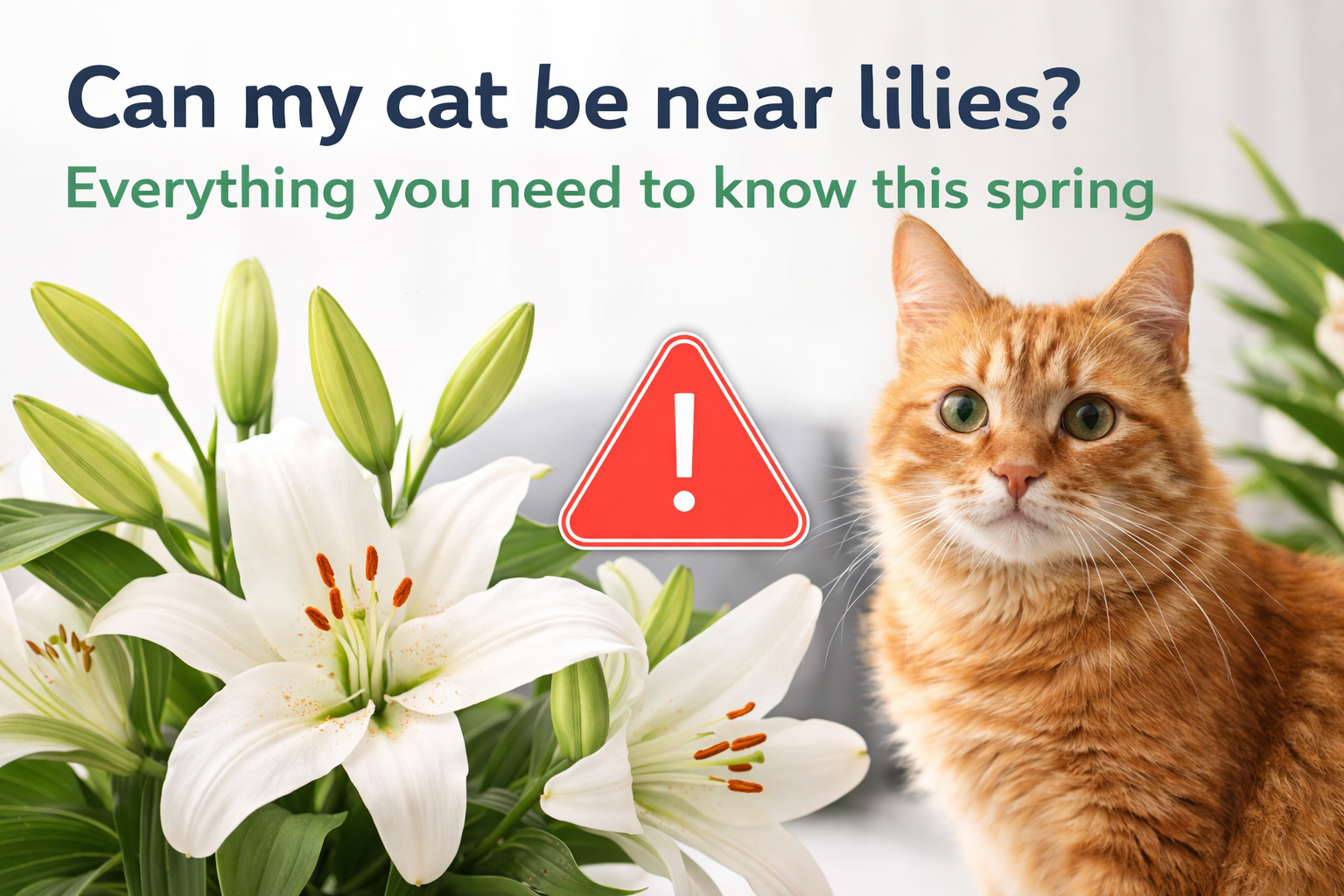
No. Lilies are extremely toxic to cats, and even indirect exposure, such as pollen transfer, brushing against a flower, or drinking vase water, can cause fatal kidney failure. Cats should never be allowed near lilies under any circumstances.
If there's one plant every cat owner needs to know about, it's the lily. This is not a "keep it on a high shelf" situation. Lilies are so toxic to cats that even indirect exposure, such as pollen transfer, can be dangerous, and every year they're responsible for a devastating number of preventable deaths.
This guide covers everything you need to know: which lilies are dangerous, exactly how toxic they are, what symptoms to watch for, and what to do if you think your cat has been exposed. If you're here because your cat has already been near a lily, scroll straight to the emergency section below.
Related guides: See our full safety checker for toxic plants for cats, and what to do if your cat is poisoned.
Call your vet or the RSPCA emergency line (0300 1234 999) immediately.
Do not wait for symptoms to appear. By the time symptoms show, kidney damage may already be severe.
Time is critical; treatment within the first few hours is significantly more effective.
Why are lilies so dangerous to cats?
Lilies contain toxins, not yet fully identified by researchers, that cause acute kidney failure in cats. What makes them uniquely dangerous is how little exposure it takes. Studies have shown that:
- Eating just two or three petals can cause fatal kidney failure
- Chewing a single leaf and not swallowing it has caused severe illness
- Drinking water from a vase containing lilies is enough to cause toxicity
- Grooming pollen off their fur after brushing against a flower can be fatal
Dogs and humans are not affected by lilies in the same way. This is specifically a cat problem, which makes it all the more important that cat owners know about it.
Which lilies are toxic to cats?
Not everything called a "lily" is equally dangerous. Here's a clear breakdown:
Extremely toxic - avoid entirely
- True lilies (Lilium spp.) - Easter lily, Tiger lily, Stargazer lily, Oriental lily, Asiatic lily, Day lily. These are the most dangerous. All parts are toxic including pollen and vase water.
- Daylilies (Hemerocallis spp.) - Commonly found in gardens. Equally as dangerous as true lilies despite having a different Latin name.
Also toxic - but different mechanism
- Lily of the Valley (Convallaria majalis) - Contains cardiac glycosides that affect the heart. Causes different symptoms but still very serious.
- Calla lily (Zantedeschia) - Contains calcium oxalate crystals. Causes intense oral burning and swelling rather than kidney failure.
- Peace lily (Spathiphyllum) - Also calcium oxalate crystals. A common houseplant but toxic — causes drooling and vomiting.
Not actually toxic
- Peruvian lily (Alstroemeria) - Despite looking similar, these are non-toxic to cats. A safe alternative for bouquets.
Lily of the Nile (Agapanthus) - Mildly irritating at most. Not in the same danger category.
If you're not certain which type of lily you have, treat it as extremely toxic. The consequence of getting this wrong is too severe to risk.
When are lilies most common?
Lilies are a year-round hazard but particularly prevalent at certain times:
- Valentine's Day (February) - Lilies are one of the most popular flowers in bouquets. Many arrive in homes without owners realising the risk.
- Easter (March/April) - Easter lilies are specifically named for this season and are everywhere in the weeks around Easter.
- Spring generally - Florists and supermarkets are full of lilies from March through to June.
- Christmas (December) - Christmas lilies and mixed festive bouquets frequently contain lilies.
The message is simple: before accepting any bouquet or buying cut flowers, check whether lilies are included. If they are, either ask for a lily-free arrangement or keep them somewhere your cat absolutely cannot access.
Symptoms of lily poisoning in cats
Symptoms typically appear within 2-6 hours of exposure. If you notice any of these, especially if your cat has had access to lilies, contact your vet immediately without waiting for symptoms to progress.
Early symptoms (within 2-6 hours)
- Vomiting - often the first sign
- Drooling or excessive salivation
- Loss of appetite
- Lethargy and unusual quietness
Later symptoms (12-24 hours) - kidney failure developing
- Increased or decreased urination
- Increased thirst
- Dehydration
- Disorientation or wobbly movement
- Seizures in severe cases
After 24-72 hours
- Complete kidney failure if untreated
- At this stage, the prognosis is very poor even with treatment
The most important thing to understand is that the early symptoms look like a mild stomach upset. Owners often wait to see if their cat improves. By the time more serious symptoms appear, significant kidney damage has already occurred. Do not wait.
What to do if your cat has been exposed to a lily
Treatment is most effective within the first 6 hours. After 18 hours, outcomes are significantly worse.
Even if your cat seems completely fine, call your vet immediately if you suspect any exposure.
Step 1: Call your vet right now
Don't Google. Don't wait and see. Call your vet or an emergency animal hospital immediately. If it's outside normal hours, call the RSPCA emergency line on 0300 1234 999 (free, 24/7) or the Animal Poison Line on 01202 509000 (charges apply but specialist advice).
Step 2: Tell them exactly what happened
Try to tell your vet: which type of lily (if you know), which part of the plant, roughly how much, and when it happened. Take a photo of the plant if you can, it helps identification.
Step 3: Don't induce vomiting yourself
Unless specifically instructed by a vet, do not try to make your cat vomit. Some methods used in humans are dangerous for cats. Your vet will advise on whether this is appropriate.
Step 4: Get to the vet as fast as possible
Treatment typically involves inducing vomiting if caught early, activated charcoal to absorb toxins, and intravenous fluids to protect the kidneys. The sooner treatment starts, the better the outcome.
Safe alternatives to lilies
If you love having flowers in the home, there are beautiful alternatives that are completely safe for cats:
- Roses: petals are safe (watch for thorns). Ask your florist for lily-free bouquets.
- Sunflowers: bright, cheerful, and completely non-toxic.
- Snapdragons: colourful and safe. Great in a vase.
- Orchids: elegant and non-toxic. Long-lasting too.
- Peruvian lilies (Alstroemeria): look similar to true lilies but are safe.
- Gerbera daisies: vivid, cheerful, and completely cat-safe.
When ordering flowers for someone who has a cat, it's worth specifying "no lilies please", most florists are happy to accommodate this.
Looking for more safe plant ideas? See our full guide to cat-safe plants for every room in your home.
Removing lilies from your home safely
If you have lilies in the house right now and want to remove them safely:
- Wear gloves when handling them; pollen can transfer from your hands to your cat when you stroke them
- Carefully remove the flowers and put them directly into a sealed bag
- Wipe down any surfaces where pollen may have fallen
- Dispose of the vase water carefully
- Check your cat's coat for any pollen, gently wipe with a damp cloth if you spot any
- Wash your hands thoroughly before touching your cat
Instantly check if any plant, food, or household item is safe for your cat using the free CanMyCat safety checker at canmycat.com.
The plant guide also lists 200+ safe and toxic plants with care information and safe alternatives.
The short version
This article is based on veterinary toxicology guidance from organisations including ASPCA Animal Poison Control, International Cat Care, and Pet Poison Helpline.
- All true lilies are extremely toxic to cats - even tiny amounts can cause fatal kidney failure.
- Pollen, petals, leaves, and vase water - all dangerous.
- Symptoms appear within 2-6 hours - but don't wait for symptoms before calling your vet.
- Treatment is most effective within 6 hours - speed is critical.
- Safe alternatives exist - roses, sunflowers, orchids, and gerberas are all cat-friendly.
If in doubt, call your vet. There is no such thing as overreacting when it comes to lily exposure in cats.
Frequently asked questions
Can cats smell lilies safely?
Smell alone is not the primary concern, but cats investigate flowers closely, and pollen can easily transfer to their fur or paws during sniffing. From there, grooming can lead to ingestion. It's best to keep cats away entirely.
Are dried lilies still toxic to cats?
Yes. All parts of the lily plant remain toxic even when dried. Dried flower arrangements containing lilies should be treated with the same caution as fresh ones.
What if my cat just walked past a lily?
Monitor closely and check their coat for pollen. If there's any chance of contact, particularly if you notice pollen on their fur, call your vet immediately rather than waiting to see if symptoms develop.
Can cats eat flowers at all?
Some flowers are safe for cats: roses, sunflowers, gerberas, and orchids are all non-toxic. Others are extremely dangerous. Always check before bringing cut flowers into a home with cats.
Are lilies toxic to dogs too?
Lilies are significantly less toxic to dogs than to cats. Dogs may experience mild gastrointestinal upset, but the severe kidney failure seen in cats is not typically observed in dogs. That said, any plant ingestion should be discussed with a vet.
🐱 Check if something is safe for your cat
Use our free AI-powered safety checker — instant results for any food, plant, or household item.
Try CanMyCat free →